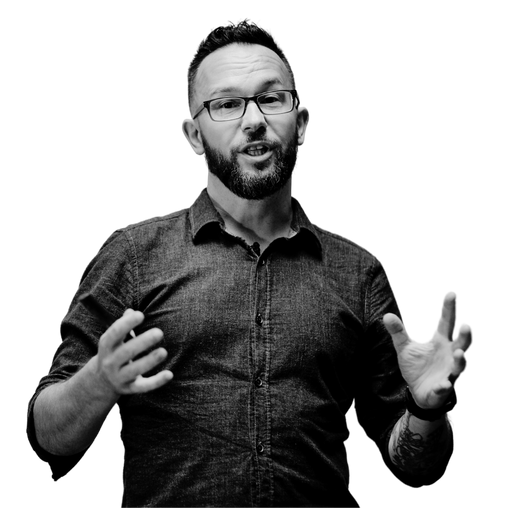
MEET TOMASZ DRYBALA
I help CEOs and senior executives recognise the hidden drivers of their decision-making.
For nearly 30 years, I’ve lived the consequences of decisions that looked right in the moment but collapsed under pressure. In the first two decades of my career, I lost four businesses, my home, and everything I owned. I went through divorce, debt, and false accusations. I was no longer living with my sons.
It would have been easy to give up, but I couldn’t abandon the example I set for my children. Instead, I committed to understanding why capable leaders repeat decisions that undermine long-term outcomes.
Pursuing targete programs at University College London, Stanford, Harvard, Cambridge, Columbia, and UC Berkeley, while building a body of work on how neurochemical feedback loops shape executive judgment, timing, and execution.
Taking responsibility, rebuilding from failure, and restoring my own confidence was the hardest task I’ve ever faced. Now, I help CEOs see what I once missed—the invisible forces driving their decisions and execution.
I am pursuing a master’s and PhD in applied neuroscience, running research with more than 100 CEOs, and working directly with senior leaders to map and reset their decision-making patterns.

Author:
Director, Neuro-Based Leadership Centre
We partner with CEOs and executive teams to diagnose hidden decision-making loops, reset leadership patterns, and build clarity-first execution systems.
Outside of business, I have run 27,000 km across 14 countries with a backpack, speaking at universities and sharing insights with more than 50,000 people.
Master’s and PhD Research
In 2025, I began formal research into the neuroscience of decision-making as preparation for my forthcoming Master’s and eventual PhD at a leading neuroscience university in London. This marks the next phase in a body of work I’ve built over the past decade: understanding how internal neurochemical patterns shape the way leaders think, decide, and lead under pressure.
This research extends the core principles behind my books and the Neuroscience of CEO Decision-Making program, translating them into formal scientific inquiry.
Focus of the Study
The research explores a question at the heart of modern leadership: How do neurochemical feedback loops shape and reinforce decision-making patterns, and what interventions can interrupt these loops to improve the quality of strategic decision-making and execution?
Key Areas of Investigation
This research is designed to help leaders understand how internal patterns drive external outcomes and how to create measurable change where it matters most.
As part of this work, I’m engaging directly with CEOs, founders, and executives, studying how decision patterns emerge under pressure, and co-developing new models to enhance clarity, timing, and strategic depth.

Founder & Director
The Neuro-Based Leadership Centre is where my decade of research, coaching, and international work come together, built for leaders who want to do more than perform. They want to transform.
At the Centre, we work with founders, executives, and high-performing teams to break hidden patterns, strengthen decision-making, and align behaviour with long-term goals. Everything we do is grounded in neuroscience, specifically the neurochemical and cognitive loops that drive action, reinforce bias, and shape leadership outcomes.
How Leaders Benefit:
Our approach is not just informative, it’s transformative. The Centre exists to help high-performing leaders make better decisions, build stronger systems, and lead from a place of grounded, strategic clarity.

Targeted Academic Study
To deepen the scientific foundation of my applied neuroscience work, I am pursuing focused programs at leading academic institutions that allow me to explore how the brain drives behaviour, motivation, decision-making, and resilience across both individual and organisational settings. Each program is chosen to sharpen the practical relevance of my work and strengthen its scientific depth. The result is a body of insight that is continuously grounded in research and designed for real-world transformation.
Institutions include:
This academic training enables me to:


Books
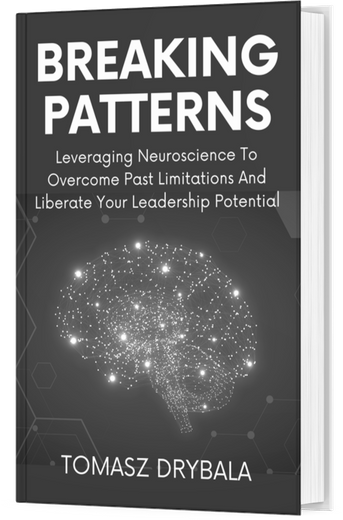
Between 2021 and 2025, I authored three books that integrate lived experience, field research, and applied neuroscience. Each is written for leaders who are ready to challenge patterns, sharpen their clarity, and elevate their decision-making and execution.
These books form the intellectual foundation of my work. They offer practical, science-based frameworks to help high-performing individuals recognise how subconscious patterns shape leadership behaviours, and how those patterns can be rewired to drive sustainable change.


University of Westminster – Pre-Research Collaboration
In 2020, I entered a structured pre-research collaboration with the University of Westminster to explore how mindful endurance practices impact focus, emotional regulation, and flow states in high-performance environments. This work emerged directly from my applied methodologies and aimed to contribute new insight into the psychobiological effects of long-distance running on clarity and resilience.
Scope and Contribution:
While the full study did not progress beyond the preparatory phase due to funding limitations, the collaboration laid a foundation for future research at the intersection of endurance, neuroscience, and human performance.
Additional Academic Interest
During this period, I was also approached by a professor at Manchester Metropolitan University to explore the biomechanical and cognitive implications of movement variability in ultra-endurance running. Although no formal project was initiated, this inquiry reflected growing academic interest in the applied relevance of my work.

University Workshops – Thailand, Malaysia, Singapore
Between 2019 and 2020, I was invited to deliver neuroscience-based workshops at over 20 universities across Thailand, including Mahidol University, Thammasat University, Naresuan University, and Bangkok University. An additional 30 workshops were scheduled in Malaysia and Singapore before being cancelled due to the COVID-19 pandemic.
These sessions focused on the applied neuroscience of focus, flow states, and cognitive clarity, offering students and faculty practical tools to enhance emotional regulation, learning capacity, and long-term mental resilience.
Highlights and Impact:
This academic collaboration deepened the foundation of my work, reinforcing the principle that neuroscience, when practically applied, can elevate both individual capacity and institutional performance.
Self-Directed Researcher and Practitioner
Since 2019, I’ve focused exclusively on applied neuroscience—examining how neurochemical feedback loops influence decision-making, reinforce cognitive bias, and drive behavioural patterns in leadership and high-performance environments. This work combines deep research with real-world application, developed not in theory alone, but through measurable outcomes in the field.
Core Contributions and Focus Areas:
This body of work forms the foundation of my approach: neuroscience not as abstract insight, but as a practical tool for changing how leaders think, decide, and act under pressure.


Entrepreneur and Business Owner
Over two decades, I built and led multiple companies through fast-paced, high-pressure environments. Some achieved strong traction. Others collapsed. What initially appeared as isolated outcomes revealed something far more valuable: a repeating pattern of emotional dynamics that consistently shaped critical decisions, risk tolerance, and long-term strategy.
These weren’t simply business outcomes; they became the foundation for my work in applied neuroscience. By tracing decisions back to their neurobiological origins, I began to uncover how feedback loops involving dopamine, cortisol, and other neurochemicals drive behaviour long before logic engages.
Core Insights and Capabilities:
These years provided more than experience. They gave me a practical, field-based lens into how leadership behaviour is shaped—not by intention alone, but by patterns embedded deep within the brain’s predictive systems.


My early academic years revealed a consistent contrast between external leadership and internal cognitive struggle. While I faced challenges with focus and emotional regulation, I also demonstrated early strengths in creativity, initiative, and relational intelligence—traits that later became foundational to my work in leadership and behaviour change.
Primary School
Secondary School – Technical Education in Technology Systems
This contrast between external leadership and internal challenge later became central to my work in decision-making and cognitive-emotional patterns.
Early University Attempts